Strawberry season here in Spain naturally coincides with Easter. This was great for us, because we are in Andalucía, where the traditions are most lavish and widely-celebrated. Semana Santa (Holy Week) is observed differently in each city in Spain. We were luck to be in Granada for the first part of the week.
The celebrations in Andalucía center around parades. Granada is known for the simplicity and elegance of its procesiones. Even though each procession has its unique aspects, there are major similarities. Granada (which is a city a little smaller than St. Petersburg, FL, for reference) has at least 4 or 5 parades a day during Semana Santa, each one lasting about 6 hours, each one with a particular fraternity participating. I was a little worried about the logistics of finding the parades. I shouldn’t have–they were everywhere in the old city.
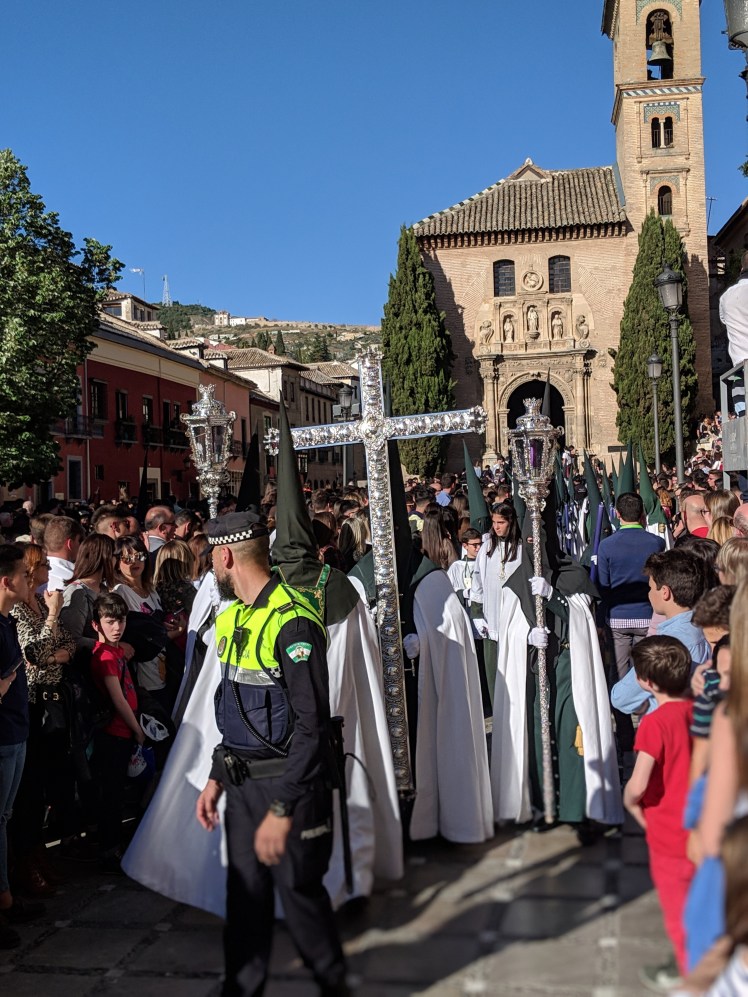
 The processions begin at their host church, and the Nazarenos lead the way. Their cone shaped hats originated during the Spanish Inquisition (so more than 400 years before the KKK, btw) as a way to demonstrate public sorrow for sin. Some penitents walk barefoot. In the way traditions are wont to shift, it’s now considered an honor to walk as a Nazareno in the processions.


 After the Nazarenos, the altar boys and girls wave incense and carry water bottles for the brotherhood members. It’s got to be hot under the robe, hat, and cape! They prepare the way for the paso.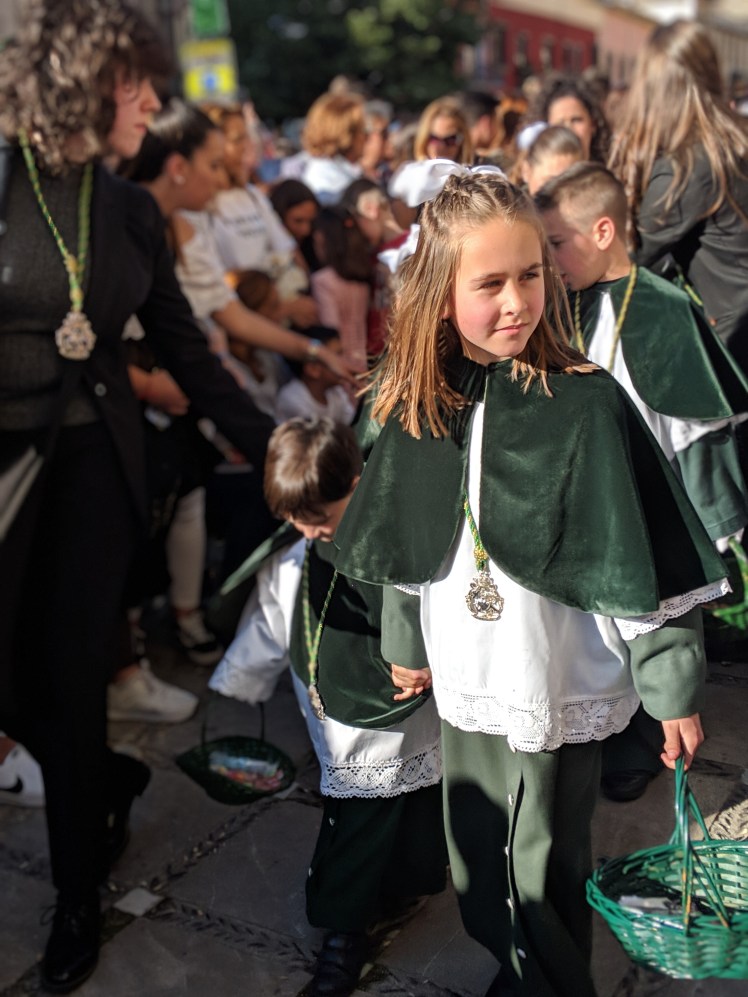
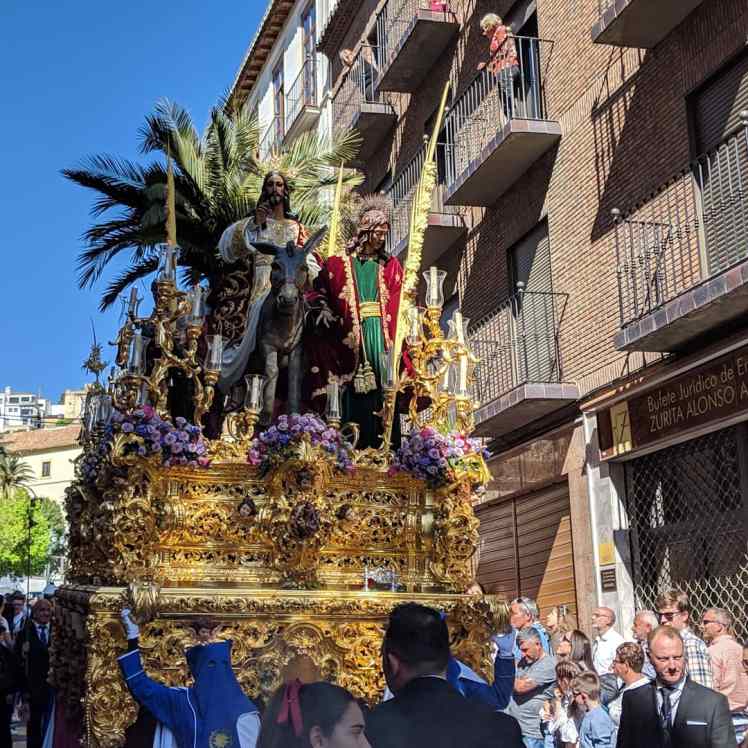
 The first paso typically reflects a scene from Jesus’ last days on earth. We saw a tableau of Jesus entering Jerusalem on Palm Sunday, one of Jesus’ trial before Pilate, and several of from the crucifixion.

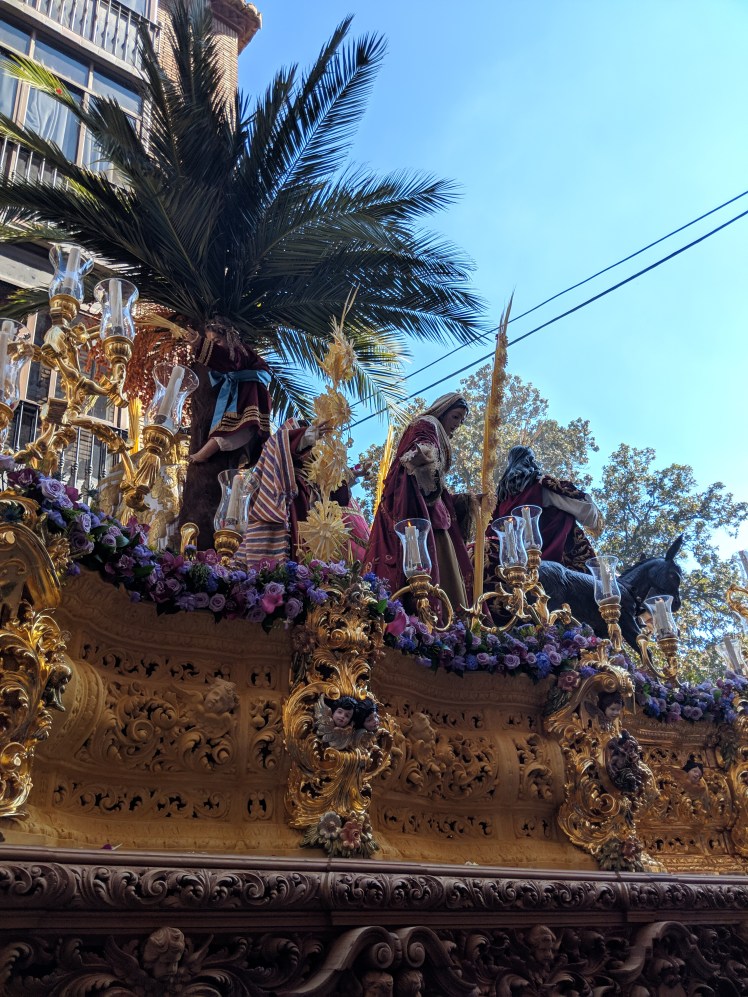
 After the paso comes a band. I found myself unexpectedly moved by the mournful dirges. More than anything else in the procession, the music helped me connect to the sorrow and grief of the death of my savior.
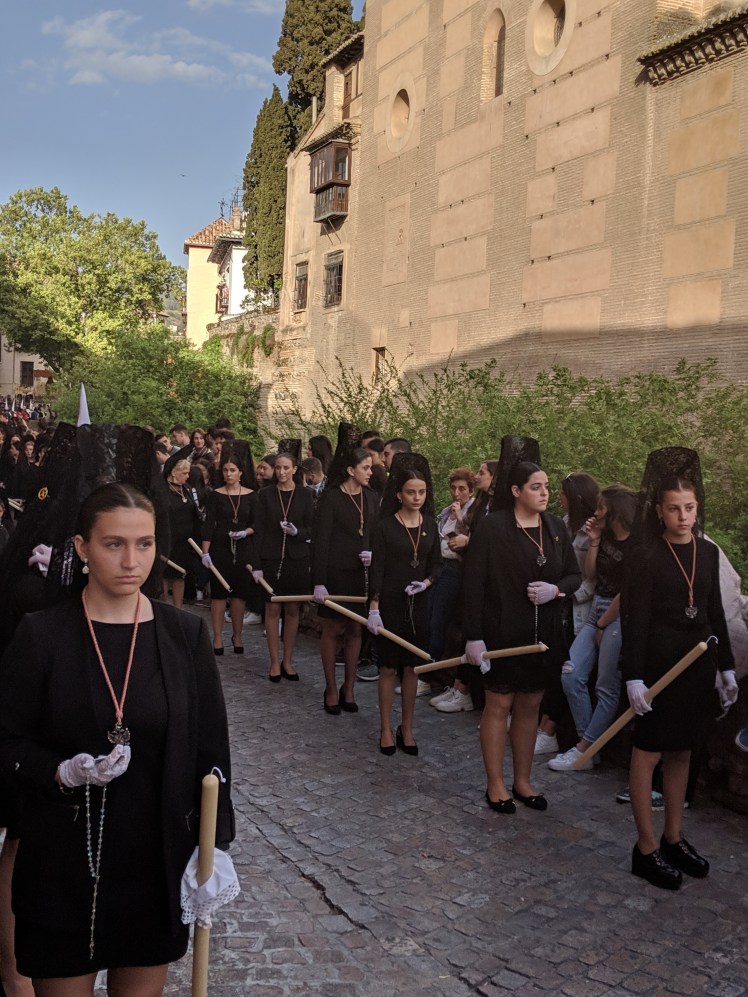
 Then came the señoras, grave and restrained. Each wore a simple, fittsed black dress, gloves, and elegant earrings–nothing flashy or overly ornamental. Hair pulled back in a chignon, every head was crowned with the peinata comb and a mantilla of black lace. Each carried a rosary. The women were of all ages–there were even a few girls scattered among then.
 Last came the most ornate paso of all– the Virgin’s paso. Although they all looked similar to me, each with a mourning, tear-stained Mary crowned with stars and wearing an enormous, embroidered cape, some people become superstitious and committed to “their” Virgin.
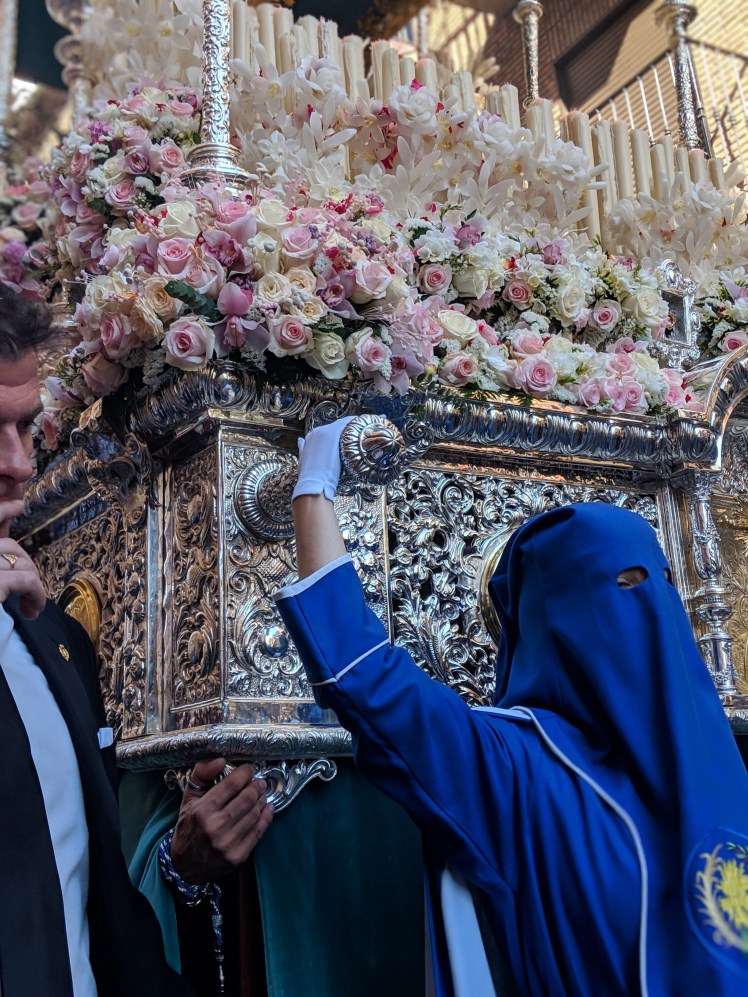
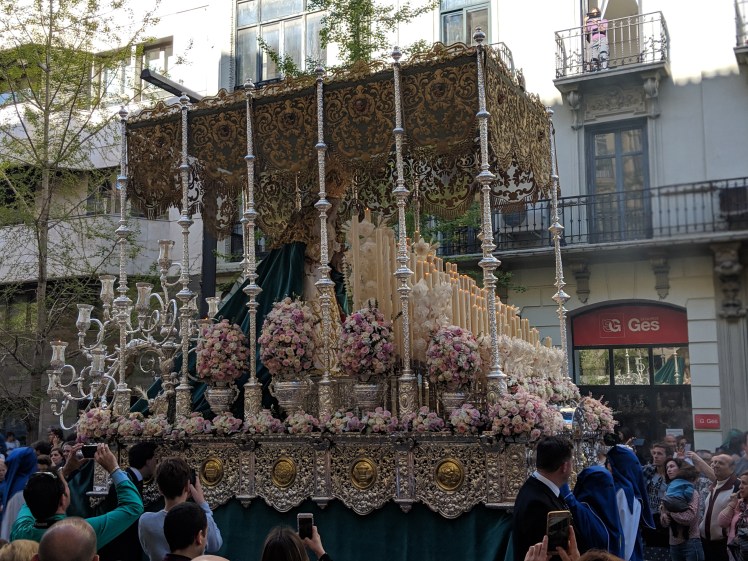
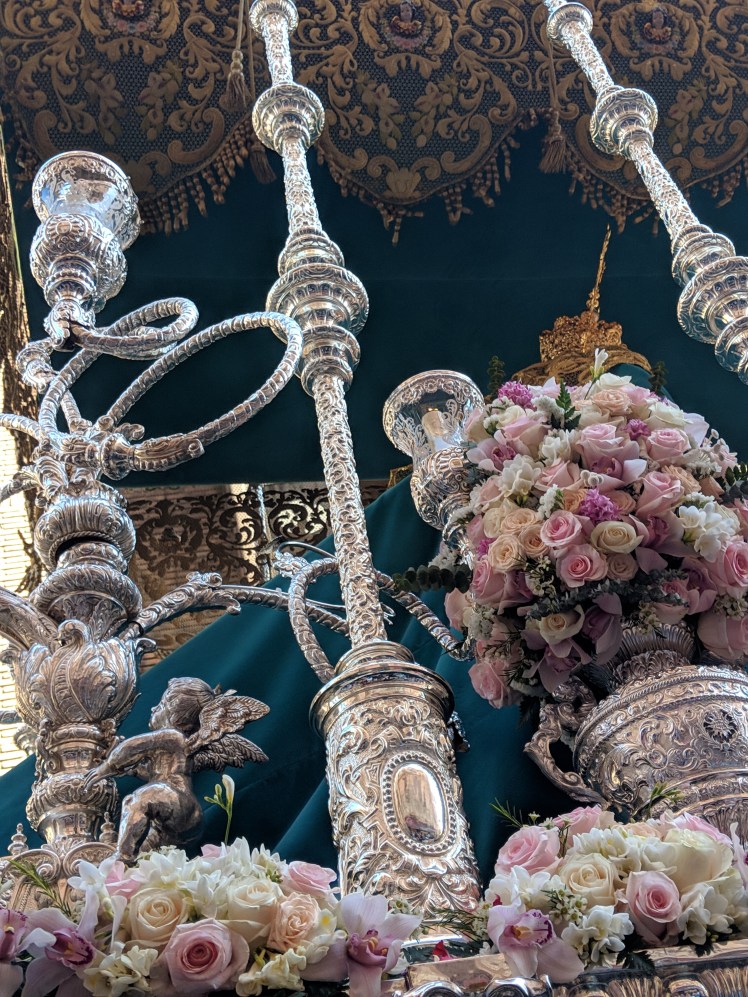


 These pasos are enormous, usually weighing over a metric ton, decorated with intricate scrollwork, pillar candles, and fresh flowers. They are carried by hand, and the “sack-men” who carry the paso slowly through the streets have to stop every hundred feet or so to rest. It makes for a slow parade. People touch the paso as it goes by, and call “que linda!” (how lovely) as Mary goes by.For a Protestant like me, the processions were culturally fascinating, but not spiritually helpful. The spectacle was amazing, but not more than that for me. We have seen how the hypocrisy and power-struggles of religion have turned so many away from the Jesus who himself gave up power and authority and earthly glory, who suffered alone to rescue the sinner and the self-righteous alike.Seville has perhaps the most famous processions of all, but after coming home to Huelva we all felt that we had seen enough pomp and circumstance to last us many a day. It didn’t seem worth the headache of navigating a small city in a huge car with gajillions of tourists.We celebrated at home together with our own Good Friday service. It was special to commemorate Christ’s death in a quiet, meditative way, although we definitely missed our church family. On Sunday we celebrated with friends, and looked forward to the great Feast by having a little one of our own. I made torrijas, which is the traditional Easter food here (like French toast, but better). I couldn’t find plastic Easter eggs to save my life, but we introduced our Spanish friends to a candy hunt, and I think they have a new American Easter tradition now 😉.

 It was definitely a different Holy Week than our normal, and such a privilege to see Spain in all her glory.
 Wonder and Wander